
About Mark
Support Mark - Contact Mark - Who else should I vote for?
Mark’s opening comments to the recorded UCU hustings. You can find Mark's answers to member-submitted questions at the bottom of this page.
What I believe in

I have a 25 year history of activism that I bring into my UCU work, having been involved in campaigns around refugees and asylum seekers, LGBT+ issues, resisting war and much more, across the three main places where I have lived - Australia, Japan and the UK. My activist history is built around sticking up for the underdog, fighting injustice and sustaining relationships of community, collectivity and care that can withstand oppression
My work to date
I am a campaigner, writer, academic and historian, who has worked and studied on three continents before arriving in the UK in 2012. I have worked at the University of Sheffield since then, and been active in various roles in my local UCU branch since 2017.
As a migrant to the UK myself, I initially became active around migrant member rights, co-establishing the group International & Broke, which built a campaign to normalise reimbursement of migration-related fees for workers in UK HE. We won at many higher education institutions, although there remains much more to do to support the approximately one third of HE staff who are international, and the many international staff working in other areas of post-16 education. That’s why I helped lead the internal push to create migrant member representative structures within UCU, a first in the trade union movement when we created them in 2019.
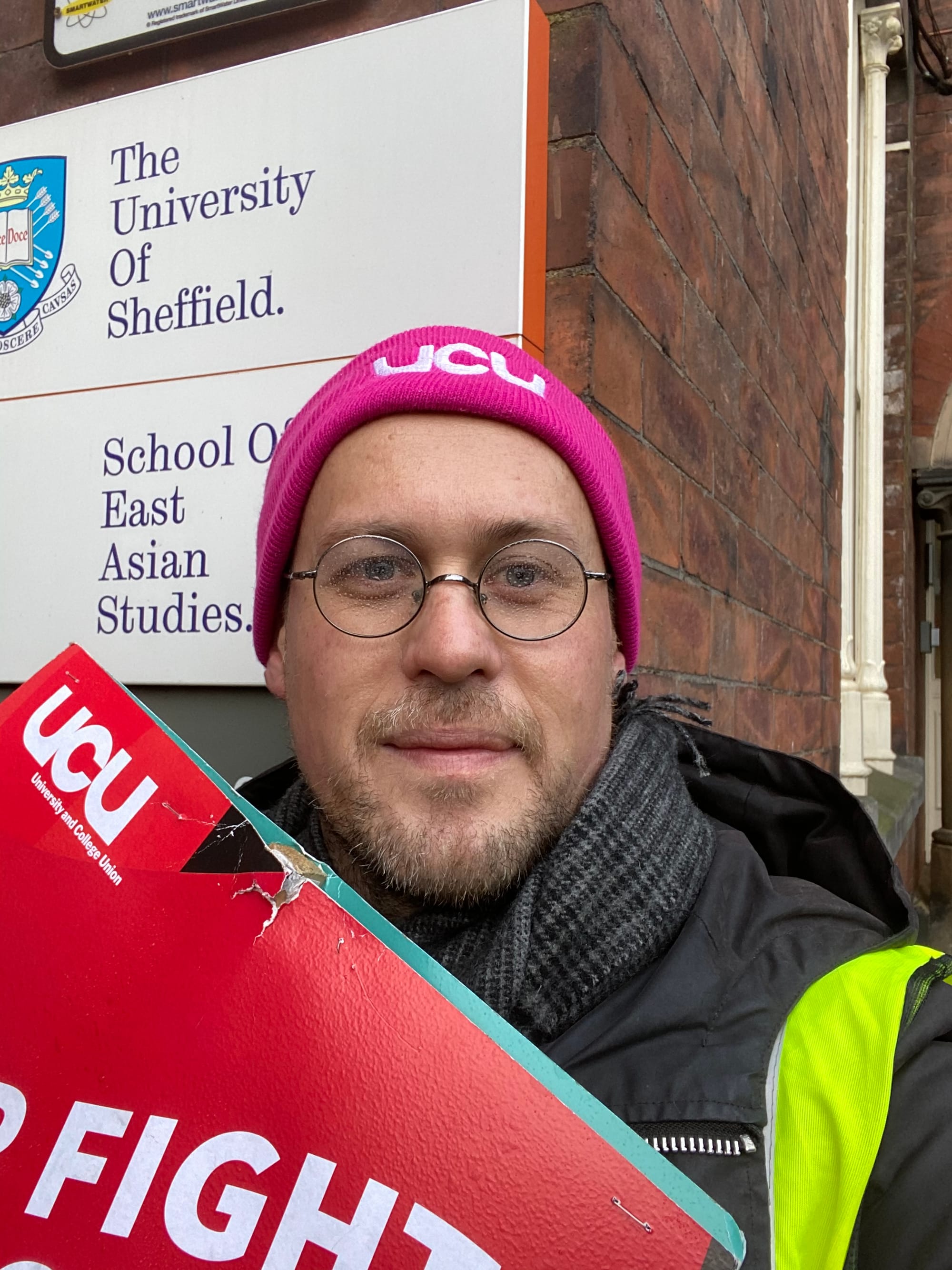
Like many others in USS institutions, my union activity increased off the back of the 2018 USS Strikes. I had joined the local branch committee just before this and subsequently held roles as Equality Officer, Branch Secretary during the pandemic years and Branch Treasurer, as well as acting as a caseworker and representing and advocating for members individually and collectively. That knowledge of individual cases and collective processes has proved to me that we win best when we are building from the ground up to shape campaigns.
Over the last year, my primary focus has been working with colleagues in my department to defend jobs and resist plans to convert teaching colleagues’ roles into term-time only contracts. Over that year, I have helped double our departmental UCU density to over 75% and made it incredibly difficult for management to push through their proposed changes. Density is key for us as a union - the higher our membership, the stronger we are, as we know from other unions’ successes.
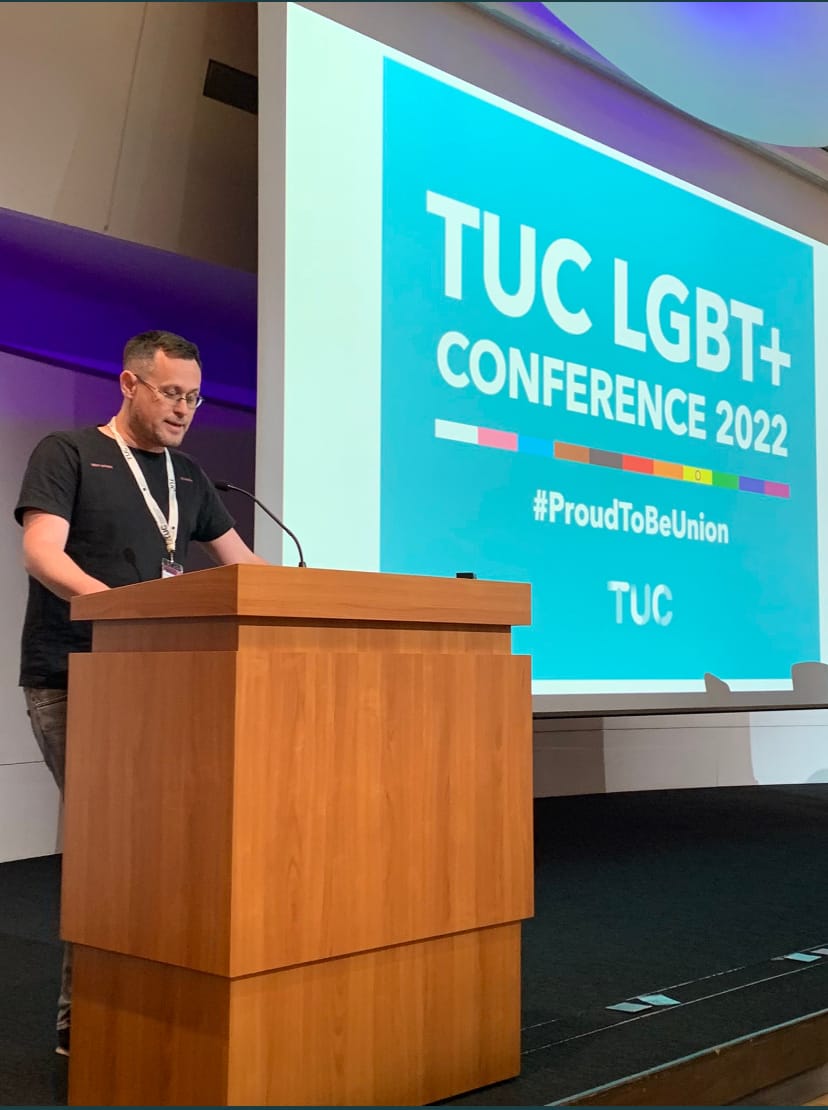
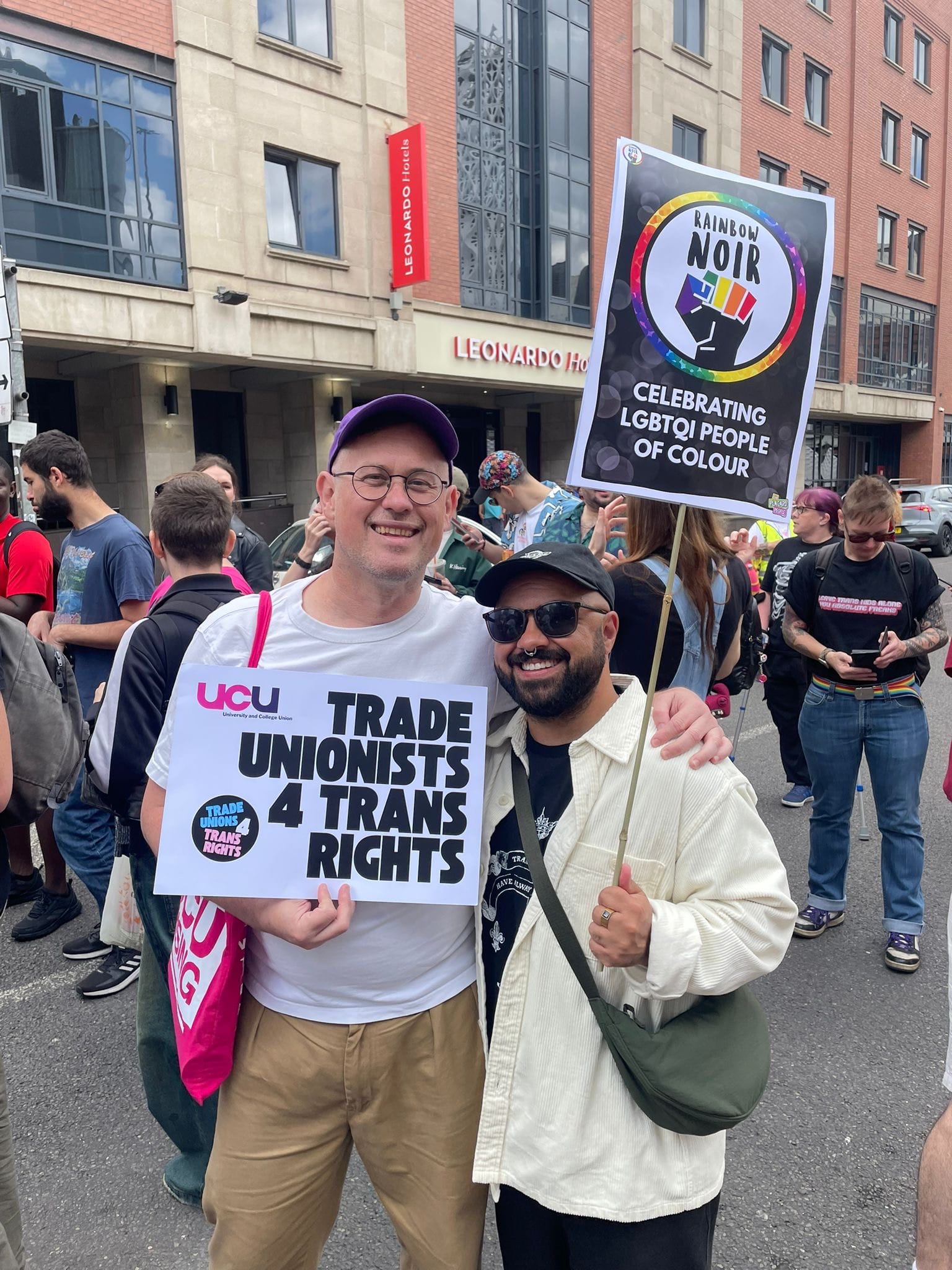
I have also served several terms on the NEC as a UK-wide HE rep and representing LGBT+ members. I believe deeply in our union’s equality agenda, and am particularly proud of our unwavering support for our trans and non-binary siblings. I have also been a UK-wide negotiator over pay and related matters and pensions (USS).
I understand how UCU works, and the reasons why it sometimes doesn’t. But I believe wholeheartedly that our union can and must be better at delivering with and for members, and driving the change post-16 education in the UK needs. That requires us to also change, organisationally and interpersonally. We need to focus more on what brings us together, and less on what divides us internally.
My professional experience
I am an active scholar, publishing in the fields of Japanese Studies, history and, through a range of collaborations in interdisciplinary forums with geographers, feminist theorists, anthropologists and more. I also collaborate with artists, curators and producers to showcase artists and culture from East Asia in the UK. My academic work, like my activist history, is built on collaboration and promoting ways to work across differences.
I work actively with other professional bodies, co-authoring the landmark report by the Royal Historical Society on LGBT+ histories and historians, which built on their important work on gender equality and on race and ethnicity. I convened the European Association for Japanese Studies history track, serve on the AHRC Peer Review College and have been an editorial collective member at the leading radical history publication History Workshop Journal for over a decade. Here you can read a couple of my reflections on picket lines and trade unionism for History Workshop.
I understand how important your professional expertise are to you as members of professional communities. As a union, we can and should be working more effectively with our professional organisations and those academic and professional communities to build alliances that can confront the many challenges we face. My track record demonstrates I know how to do that.
My life outside UCU
I live in south Manchester where I am a member of a local group combating the rise of the far right in the community I live in, and am also active in local LGBT+ groups and those working to end the HIV crisis. I am not a member of any political party.
Hustings
Following the cancellation of hustings for the Vice President positions, each candidate was asked to create a video response to 5 questions. You can watch or read my response to each question below.
What political party or parties, if any, are you a member of?
Read my answer
I'm not. Although I recognise that many UCU members are. My main priority politically is this - our union? We should be building an effective, pluralistic and inclusive union that can drive the change post-16 education so desperately needs, while holding the trust of members, regardless of political party affiliation.
While important change can be delivered through mainstream politics, what's more important to me is work outside and, when appropriate, alongside those parties. Building community and connection between people and sustaining a wider conversation about the relationship between politics and people's lives often has to happen outside the structures and the polarisation created by political parties.
How should the union tackle increasing workload pressures?
Read my answer
Workload is an issue affecting all of post-16 education. It's a health and safety issue. We all know colleagues who have been signed off sick due to unsustainable workloads. It's a pay issue. If employers keep piling up more work on the same staff, we're working essentially for free. And it's a jobs protection issue and an anti-casualisation issue. Setting fair workloads drives the need for proper staffing levels.
The impact of employers continually piling up more work on less staff is felt by almost all of our members. We do have tools to fight back, although we need to use them more. I'm going to start with a shout out to members in further education who are dealing with a massive turnover of staff as a result of workload pressures. The shocking statistic is that 50% of FE staff leave within the first three years of employment. If colleagues including Suzi Toole, who's running as my counterpart for vice president in further education, are doing really important work driving a workplace health and safety initiative that looks to train and empower health and safety reps to collectivise individual cases and mount claims against employers.
That's exactly what we need in our union. Health and safety legislation is a great tool we should be making more of as I've argued for some time. At Sheffield during Covid, for example, we turned every single rep into a health and safety rep, putting our employer on notice that they would have to do more to protect staff - and they did.
We've also used health and safety to slow and disrupt review, restructure and redundancy plans. In other parts of HE too branches are using our powers under health and safety legislation to bring attention to the failure of employers to mitigate stress as a result of work pressures. Birmingham, for example, recently won a Health and Safety Executive order.
But as I mentioned at the outset, this is not just a health and safety issue. Workload was a key part of HE's 4 Fights demands, which resulted in the setting up of UK level working groups with employers to establish benchmarks and frameworks to address workload. Unfortunately, employers pulled out of those when we ran our strike ballot last year. A key priority has to be getting back around the table and negotiating those UK wide benchmarks.
So enforceable standards, along with empowered reps and members can begin to address the workload crisis. But ultimately, we need to build a proper campaign about jobs. Without adequate staffing, even the best benchmarks are meaningless, and that means enough real permanent jobs to do the work. I'll talk more about how I see that working a bit later, but our UK-wide structures need to be listening to members about their key priorities.
You've told us time and time again that it's jobs and workloads, and those should be the absolute top of our agenda.
University management is increasingly detached from the workforce, our working conditions and our attitudes towards our work. What can be done to strengthen workforce democracy and influence in our institutions?
Read my answer
So the governance of UK universities has essentially collapsed.
Governing councils have abandoned any responsibility for holding senior managers to account, and academic control has been heavily curtailed. The content and form of degrees is even increasingly determined by the centre. eroding academic freedom. And those in management roles are ever more removed from day to day realities, creating unhealthy divisions from the staff who do the job.
We're not alone in this. In my home country of Australia, a persistent focus on university governance failures by our sibling union, the NTU, led to a recent Senate inquiry and major news media coverage that described the basic structure of university councils as profoundly undemocratic, which we know here. That example, though, is not tangential to our experience in the UK because senior staff move between the two systems, such as new appointments at Manchester and Birkbeck.
Highly paid consultancy firms are also driving the corporatisation and downsizing of institutions, and removal of staff input into governance and administration of our universities across both systems. So learning from our international siblings is essential as the models and the key personnel are both shared.
And the scale of the problem suggests some of the ways that we need to confront this in the UK through forcing our concerns into the public sphere, as the NTEU has done in Australia, and by collaborating with key institutional partners. For example, the Council for the Defence of British Universities. And we also have evidence that some places in the UK are taking this seriously, such as in recent parliamentary committee hearings in Scotland. There are also things we can do as a union to model different ways of operating in our institutions.
As I said earlier, top down structures are not unique to our employers. Building member strength internally in our union builds our power to confront undemocratic practices by our own employers. So a strong local grassroots organisation is key here and should be the focus of our union's work going forward.
How will you bring the various groups together and work across differences?
Read my answer
Our union has a divide between higher and further education and in HE between pre- and post-92 institutions. And that imbalance can sometimes make colleagues, particularly in further education, feel undervalued and their issues deprioritised . While there are differences though, the issues our members care about are very similar. That's why I'm really excited that UCU is launching a new integrated campaigns plan that looks beyond sectoral divisions in campaign planning.
In many ways, the best example of working across difference in our union can be found in the regular collaborations between different equality strands. For example, in joint work on trans rights between the LGBTQ+ and women's committees. But more could be done to understand fellow members across different life experiences and build more inclusive asks and policies. Enacting forms of solidarity that bring together coalitions is a key lesson from our equality work.
The implicit context of this question, though, is a complaint I hear from members a lot. Why is our union so fractionalized or fractious? To be honest, I don't think one has to lead to the other, although that has happened too often in the past. In any organisation, people will congregate towards others who they have commonalities with. That's fine, but we don't have to treat each other as the enemy and my track record shows that as possible.
Off the back of the highly disruptive marketing and assessment boycott a few years ago, I was deeply demoralised. Members in my work area disengaged, some left the union, personal relationships suffered, and some people were barely speaking to each other. But we slowly rebuilt by focusing on the basics of organising. What were the issues that colleagues were concerned about? How could we collectively go about changing them, and how could we better support each other as colleagues and union members, as we did so? Things aren't perfect, but we now have a UCU density of over 80% and members have developed skills to question and challenge management decisions. That takes pressure off reps and leads to more engaged members who see the union as where they want to put their energies.
And more importantly, we look out for each other more. That has been modelled across our branch, which regularly has members meetings in the hundreds and strong workplace level organising structures. So for me, the key to working across differences is to do the work to build meaningful connections, despite our employer's aspirations to isolate us. At a UK wide level, it's harder to see that on a day to day basis, which can lead to false divisions. We're all trade unionists and to be honest on most issues are aligned. So the principles of the same: focus on what members care about and on building coalitions so that more members are engaged, more members have a say and more members have a stake in what we decide and therefore want to contribute to the work of the union.
Disagreeing better and getting on and doing the work together, as we've been doing in Sheffield, is a way we can bring our union together again.
To what extent can we build a national campaign to save our sector? And what elements do you recommend for a successful campaign?
Read my answer
Look, everyone working in higher education knows that a campaign is needed to save our sector, but that campaign must be focused and strategic, highlighting the damaging loss of tens of thousands of jobs, whole fields and disciplines and campuses that sustain communities such as in Southend.
What it can't be is something that's just tacked on to a national pay dispute. Members knew last year that was the wrong approach and rejected it. I wish that it hadn't taken a failed pay ballot with high costs in time, money and energy of our union to pull our elected reps in line. I argued against this balloting on pay issues at that time, and wanted us instead to have a serious conversation about a proper national strategy on jobs with members and branches are late off the blocks, but a national campaign still has to happen, and that campaign needs to be political, popular and, where appropriate, industrial.
But primarily it needs to be focused. As chair of UCU's Recruitment, Organising and Campaigning Committee, I want to reassure you all, though, that, albeit belatedly, the union has in place things that we will need to win as long as we develop a coherent and well-thought-out plan. New digital organising tools are being rolled out to support local organising. We've launched a parliamentary UCU group to build direct relationships to MPs and more effectively influence the debate. And we're attracting more media attention as issues in our sector mount, and internally too, our conversations are beginning to shift as members ask us to think differently about our disputes, including potentially taking the fight directly to the Secretary of State.
I want our discussions in the union to be more like the ones we've been having about new ideas like that one serious, respectful, creative, and strategic.
But in order for us to make those plans work, we need you to vote for people on our national decision-making structures who will be serious about the work that needs to happen. I recommend the slate of excellent people I work with, along with a number of independents that you can find at ucucommons.org. And if you'd like to ask me anything more, please don't hesitate to contact me via [this] website.
My ultimate request of all members, though, is that you vote, whoever you vote for. It's important that your elected leaders reflect the views of the membership.
And to finish, our sectors are crying out for leadership that can drive the positive change we as workers, our students and the wider community need in post-16 education.
The only force with the potential to do that is us as a union. And I'm ready to work with all of you over the next four years to make that happen.
Support Mark - Contact Mark - Who else should I vote for?